What Caused This?
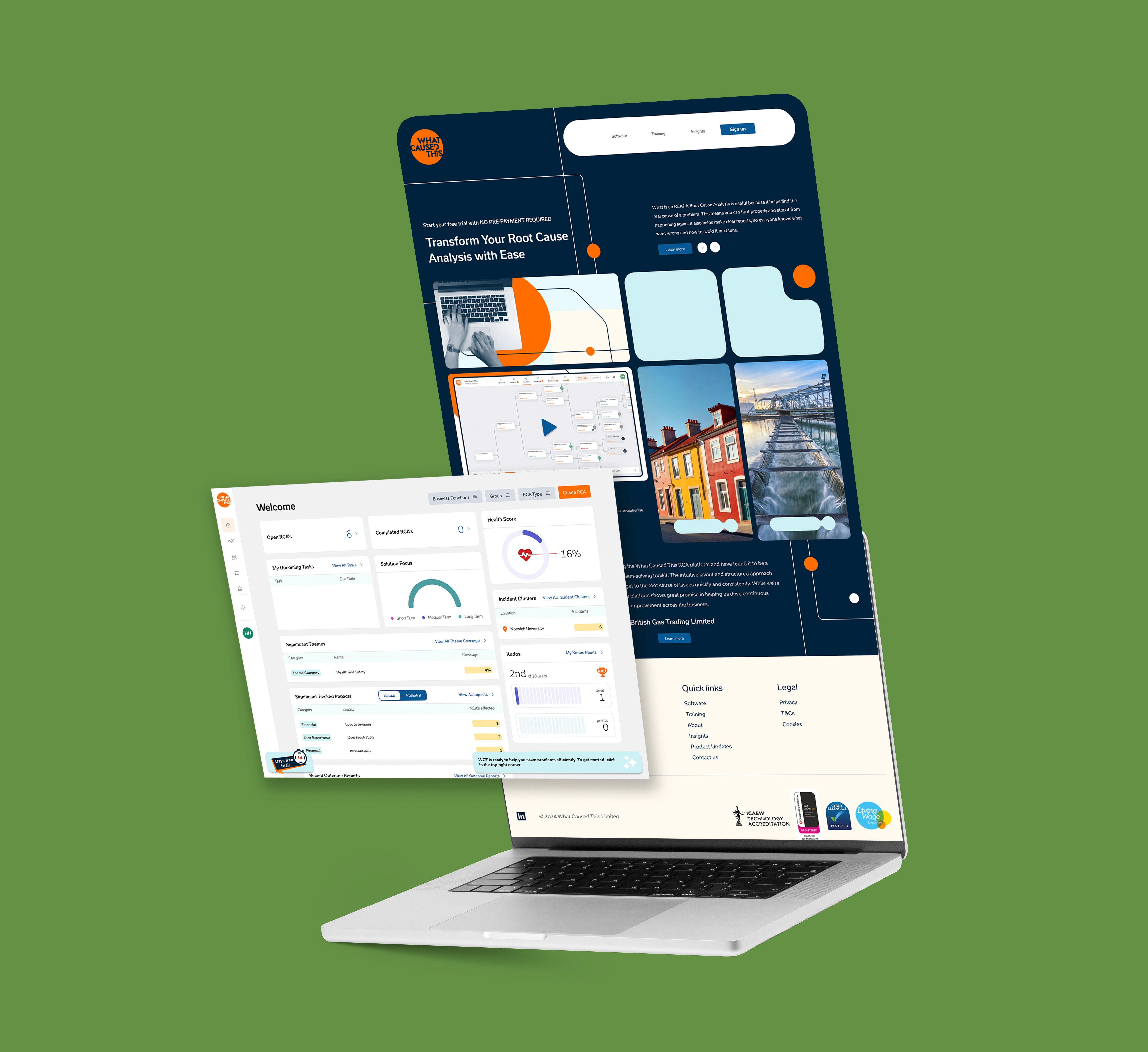
A streamlined onboarding experience for a B2B problem-solving and root cause analysis platform. The flow collects key information upfront while teaching users how the software works, allowing dashboards to be pre-filled before sign-up is complete. This reduces friction and helps users get started straight away.
Problem 🧩 ——
The original onboarding for What Caused This felt text heavy, jargon filled, and unclear. Users struggled to understand concepts such as root cause analysis, kudos points, and trial deadlines, while required fields and limited role options created unnecessary friction. Onboarding began too late in the journey and ended once users converted, missing opportunities to demonstrate value early and reinforce long term engagement. In a platform designed to simplify complex problem solving, the first experience felt overwhelming rather than empowering.
Insight 🔍 ——
Effective onboarding introduces value gradually and builds confidence through action. Nearly 50 per cent of businesses globally have adopted machine learning tools, and 77 per cent are using or exploring AI, often for automation and root cause analysis. However, 85 per cent of executives believe their organisations are poor at identifying the true causes of issues. This gap highlights the need for clear, guided systems that teach users how to think, not just where to click. Progressive disclosure, real time feedback, and interactive learning reduce cognitive load and help users form habits from the first touchpoint.
Research 📊 ——
Competitor analysis across platforms such as Duolingo, Canva, Dropbox, Figma, and Miro revealed consistent best practices in onboarding design. Successful flows delay friction, use step by step tutorials, provide contextual tooltips, and prioritise learning by doing. A B testing and annotated UX comparisons showed that visible progress indicators, optional walkthroughs, and clear milestones improve engagement and retention. Research also confirmed that onboarding should not end at sign up, but continue with feedback, guidance, and small moments of achievement to reinforce confidence and encourage repeated use.
Solution 🚀 ——
I redesigned the onboarding experience as a streamlined, step by step journey that begins before sign up is complete. The new flow collects key information upfront while teaching users how the platform works, allowing dashboards and reports to be pre filled in real time. A clear welcome screen, optional demo, and simple registration reduce friction from the outset. Interactive RCA previews, AI powered suggestions, hover triggered guidance, and visible milestones ensure users understand each step before moving forward. The result is a structured yet engaging onboarding system that reduces cognitive load, demonstrates value early, and helps users adopt What Caused This confidently into their workflow.
What Caused This?
Insight 🔍 ——
Effective onboarding introduces value gradually and builds confidence through action. Nearly 50 per cent of businesses globally have adopted machine learning tools, and 77 per cent are using or exploring AI, often for automation and root cause analysis. However, 85 per cent of executives believe their organisations are poor at identifying the true causes of issues. This gap highlights the need for clear, guided systems that teach users how to think, not just where to click. Progressive disclosure, real time feedback, and interactive learning reduce cognitive load and help users form habits from the first touchpoint.
Problem 🧩 ——
The original onboarding for What Caused This felt text heavy, jargon filled, and unclear. Users struggled to understand concepts such as root cause analysis, kudos points, and trial deadlines, while required fields and limited role options created unnecessary friction. Onboarding began too late in the journey and ended once users converted, missing opportunities to demonstrate value early and reinforce long term engagement. In a platform designed to simplify complex problem solving, the first experience felt overwhelming rather than empowering.
A streamlined onboarding experience for a B2B problem-solving and root cause analysis platform. The flow collects key information upfront while teaching users how the software works, allowing dashboards to be pre-filled before sign-up is complete. This reduces friction and helps users get started straight away.
Solution 🚀 ——
I redesigned the onboarding experience as a streamlined, step by step journey that begins before sign up is complete. The new flow collects key information upfront while teaching users how the platform works, allowing dashboards and reports to be pre filled in real time. A clear welcome screen, optional demo, and simple registration reduce friction from the outset. Interactive RCA previews, AI powered suggestions, hover triggered guidance, and visible milestones ensure users understand each step before moving forward. The result is a structured yet engaging onboarding system that reduces cognitive load, demonstrates value early, and helps users adopt What Caused This confidently into their workflow.
Research 📊 ——
Competitor analysis across platforms such as Duolingo, Canva, Dropbox, Figma, and Miro revealed consistent best practices in onboarding design. Successful flows delay friction, use step by step tutorials, provide contextual tooltips, and prioritise learning by doing. A B testing and annotated UX comparisons showed that visible progress indicators, optional walkthroughs, and clear milestones improve engagement and retention. Research also confirmed that onboarding should not end at sign up, but continue with feedback, guidance, and small moments of achievement to reinforce confidence and encourage repeated use.
What Caused This?
Insight 🔍 ——
Effective onboarding introduces value gradually and builds confidence through action. Nearly 50 per cent of businesses globally have adopted machine learning tools, and 77 per cent are using or exploring AI, often for automation and root cause analysis. However, 85 per cent of executives believe their organisations are poor at identifying the true causes of issues. This gap highlights the need for clear, guided systems that teach users how to think, not just where to click. Progressive disclosure, real time feedback, and interactive learning reduce cognitive load and help users form habits from the first touchpoint.
Research 📊 ——
Competitor analysis across platforms such as Duolingo, Canva, Dropbox, Figma, and Miro revealed consistent best practices in onboarding design. Successful flows delay friction, use step by step tutorials, provide contextual tooltips, and prioritise learning by doing. A B testing and annotated UX comparisons showed that visible progress indicators, optional walkthroughs, and clear milestones improve engagement and retention. Research also confirmed that onboarding should not end at sign up, but continue with feedback, guidance, and small moments of achievement to reinforce confidence and encourage repeated use.
Solution 🚀 ——
I redesigned the onboarding experience as a streamlined, step by step journey that begins before sign up is complete. The new flow collects key information upfront while teaching users how the platform works, allowing dashboards and reports to be pre filled in real time. A clear welcome screen, optional demo, and simple registration reduce friction from the outset. Interactive RCA previews, AI powered suggestions, hover triggered guidance, and visible milestones ensure users understand each step before moving forward. The result is a structured yet engaging onboarding system that reduces cognitive load, demonstrates value early, and helps users adopt What Caused This confidently into their workflow.
Problem 🧩 ——
The original onboarding for What Caused This felt text heavy, jargon filled, and unclear. Users struggled to understand concepts such as root cause analysis, kudos points, and trial deadlines, while required fields and limited role options created unnecessary friction. Onboarding began too late in the journey and ended once users converted, missing opportunities to demonstrate value early and reinforce long term engagement. In a platform designed to simplify complex problem solving, the first experience felt overwhelming rather than empowering.
A streamlined onboarding experience for a B2B problem-solving and root cause analysis platform. The flow collects key information upfront while teaching users how the software works, allowing dashboards to be pre-filled before sign-up is complete. This reduces friction and helps users get started straight away.
What Caused This?
A streamlined onboarding experience for a B2B problem-solving and root cause analysis platform. The flow collects key information upfront while teaching users how the software works, allowing dashboards to be pre-filled before sign-up is complete. This reduces friction and helps users get started straight away.
Problem 🧩 ——
The original onboarding for What Caused This felt text heavy, jargon filled, and unclear. Users struggled to understand concepts such as root cause analysis, kudos points, and trial deadlines, while required fields and limited role options created unnecessary friction. Onboarding began too late in the journey and ended once users converted, missing opportunities to demonstrate value early and reinforce long term engagement. In a platform designed to simplify complex problem solving, the first experience felt overwhelming rather than empowering.
Insight 🔍 ——
Effective onboarding introduces value gradually and builds confidence through action. Nearly 50 per cent of businesses globally have adopted machine learning tools, and 77 per cent are using or exploring AI, often for automation and root cause analysis. However, 85 per cent of executives believe their organisations are poor at identifying the true causes of issues. This gap highlights the need for clear, guided systems that teach users how to think, not just where to click. Progressive disclosure, real time feedback, and interactive learning reduce cognitive load and help users form habits from the first touchpoint.
Research 📊 ——
Competitor analysis across platforms such as Duolingo, Canva, Dropbox, Figma, and Miro revealed consistent best practices in onboarding design. Successful flows delay friction, use step by step tutorials, provide contextual tooltips, and prioritise learning by doing. A B testing and annotated UX comparisons showed that visible progress indicators, optional walkthroughs, and clear milestones improve engagement and retention. Research also confirmed that onboarding should not end at sign up, but continue with feedback, guidance, and small moments of achievement to reinforce confidence and encourage repeated use.
Solution 🚀 ——
I redesigned the onboarding experience as a streamlined, step by step journey that begins before sign up is complete. The new flow collects key information upfront while teaching users how the platform works, allowing dashboards and reports to be pre filled in real time. A clear welcome screen, optional demo, and simple registration reduce friction from the outset. Interactive RCA previews, AI powered suggestions, hover triggered guidance, and visible milestones ensure users understand each step before moving forward. The result is a structured yet engaging onboarding system that reduces cognitive load, demonstrates value early, and helps users adopt What Caused This confidently into their workflow.
What Caused This?
Insight 🔍 ——
Effective onboarding introduces value gradually and builds confidence through action. Nearly 50 per cent of businesses globally have adopted machine learning tools, and 77 per cent are using or exploring AI, often for automation and root cause analysis. However, 85 per cent of executives believe their organisations are poor at identifying the true causes of issues. This gap highlights the need for clear, guided systems that teach users how to think, not just where to click. Progressive disclosure, real time feedback, and interactive learning reduce cognitive load and help users form habits from the first touchpoint.
Problem 🧩 ——
The original onboarding for What Caused This felt text heavy, jargon filled, and unclear. Users struggled to understand concepts such as root cause analysis, kudos points, and trial deadlines, while required fields and limited role options created unnecessary friction. Onboarding began too late in the journey and ended once users converted, missing opportunities to demonstrate value early and reinforce long term engagement. In a platform designed to simplify complex problem solving, the first experience felt overwhelming rather than empowering.
A streamlined onboarding experience for a B2B problem-solving and root cause analysis platform. The flow collects key information upfront while teaching users how the software works, allowing dashboards to be pre-filled before sign-up is complete. This reduces friction and helps users get started straight away.
Solution 🚀 ——
I redesigned the onboarding experience as a streamlined, step by step journey that begins before sign up is complete. The new flow collects key information upfront while teaching users how the platform works, allowing dashboards and reports to be pre filled in real time. A clear welcome screen, optional demo, and simple registration reduce friction from the outset. Interactive RCA previews, AI powered suggestions, hover triggered guidance, and visible milestones ensure users understand each step before moving forward. The result is a structured yet engaging onboarding system that reduces cognitive load, demonstrates value early, and helps users adopt What Caused This confidently into their workflow.
Research 📊 ——
Competitor analysis across platforms such as Duolingo, Canva, Dropbox, Figma, and Miro revealed consistent best practices in onboarding design. Successful flows delay friction, use step by step tutorials, provide contextual tooltips, and prioritise learning by doing. A B testing and annotated UX comparisons showed that visible progress indicators, optional walkthroughs, and clear milestones improve engagement and retention. Research also confirmed that onboarding should not end at sign up, but continue with feedback, guidance, and small moments of achievement to reinforce confidence and encourage repeated use.
What Caused This?
Insight 🔍 ——
Effective onboarding introduces value gradually and builds confidence through action. Nearly 50 per cent of businesses globally have adopted machine learning tools, and 77 per cent are using or exploring AI, often for automation and root cause analysis. However, 85 per cent of executives believe their organisations are poor at identifying the true causes of issues. This gap highlights the need for clear, guided systems that teach users how to think, not just where to click. Progressive disclosure, real time feedback, and interactive learning reduce cognitive load and help users form habits from the first touchpoint.
Research 📊 ——
Competitor analysis across platforms such as Duolingo, Canva, Dropbox, Figma, and Miro revealed consistent best practices in onboarding design. Successful flows delay friction, use step by step tutorials, provide contextual tooltips, and prioritise learning by doing. A B testing and annotated UX comparisons showed that visible progress indicators, optional walkthroughs, and clear milestones improve engagement and retention. Research also confirmed that onboarding should not end at sign up, but continue with feedback, guidance, and small moments of achievement to reinforce confidence and encourage repeated use.
Solution 🚀 ——
I redesigned the onboarding experience as a streamlined, step by step journey that begins before sign up is complete. The new flow collects key information upfront while teaching users how the platform works, allowing dashboards and reports to be pre filled in real time. A clear welcome screen, optional demo, and simple registration reduce friction from the outset. Interactive RCA previews, AI powered suggestions, hover triggered guidance, and visible milestones ensure users understand each step before moving forward. The result is a structured yet engaging onboarding system that reduces cognitive load, demonstrates value early, and helps users adopt What Caused This confidently into their workflow.
Problem 🧩 ——
The original onboarding for What Caused This felt text heavy, jargon filled, and unclear. Users struggled to understand concepts such as root cause analysis, kudos points, and trial deadlines, while required fields and limited role options created unnecessary friction. Onboarding began too late in the journey and ended once users converted, missing opportunities to demonstrate value early and reinforce long term engagement. In a platform designed to simplify complex problem solving, the first experience felt overwhelming rather than empowering.
A streamlined onboarding experience for a B2B problem-solving and root cause analysis platform. The flow collects key information upfront while teaching users how the software works, allowing dashboards to be pre-filled before sign-up is complete. This reduces friction and helps users get started straight away.
What Caused This?
A streamlined onboarding experience for a B2B problem-solving and root cause analysis platform. The flow collects key information upfront while teaching users how the software works, allowing dashboards to be pre-filled before sign-up is complete. This reduces friction and helps users get started straight away.
Problem 🧩 ——
The original onboarding for What Caused This felt text heavy, jargon filled, and unclear. Users struggled to understand concepts such as root cause analysis, kudos points, and trial deadlines, while required fields and limited role options created unnecessary friction. Onboarding began too late in the journey and ended once users converted, missing opportunities to demonstrate value early and reinforce long term engagement. In a platform designed to simplify complex problem solving, the first experience felt overwhelming rather than empowering.
Insight 🔍 ——
Effective onboarding introduces value gradually and builds confidence through action. Nearly 50 per cent of businesses globally have adopted machine learning tools, and 77 per cent are using or exploring AI, often for automation and root cause analysis. However, 85 per cent of executives believe their organisations are poor at identifying the true causes of issues. This gap highlights the need for clear, guided systems that teach users how to think, not just where to click. Progressive disclosure, real time feedback, and interactive learning reduce cognitive load and help users form habits from the first touchpoint.
Research 📊 ——
Competitor analysis across platforms such as Duolingo, Canva, Dropbox, Figma, and Miro revealed consistent best practices in onboarding design. Successful flows delay friction, use step by step tutorials, provide contextual tooltips, and prioritise learning by doing. A B testing and annotated UX comparisons showed that visible progress indicators, optional walkthroughs, and clear milestones improve engagement and retention. Research also confirmed that onboarding should not end at sign up, but continue with feedback, guidance, and small moments of achievement to reinforce confidence and encourage repeated use.
Solution 🚀 ——
I redesigned the onboarding experience as a streamlined, step by step journey that begins before sign up is complete. The new flow collects key information upfront while teaching users how the platform works, allowing dashboards and reports to be pre filled in real time. A clear welcome screen, optional demo, and simple registration reduce friction from the outset. Interactive RCA previews, AI powered suggestions, hover triggered guidance, and visible milestones ensure users understand each step before moving forward. The result is a structured yet engaging onboarding system that reduces cognitive load, demonstrates value early, and helps users adopt What Caused This confidently into their workflow.
What Caused This?
Insight 🔍 ——
Effective onboarding introduces value gradually and builds confidence through action. Nearly 50 per cent of businesses globally have adopted machine learning tools, and 77 per cent are using or exploring AI, often for automation and root cause analysis. However, 85 per cent of executives believe their organisations are poor at identifying the true causes of issues. This gap highlights the need for clear, guided systems that teach users how to think, not just where to click. Progressive disclosure, real time feedback, and interactive learning reduce cognitive load and help users form habits from the first touchpoint.
Problem 🧩 ——
The original onboarding for What Caused This felt text heavy, jargon filled, and unclear. Users struggled to understand concepts such as root cause analysis, kudos points, and trial deadlines, while required fields and limited role options created unnecessary friction. Onboarding began too late in the journey and ended once users converted, missing opportunities to demonstrate value early and reinforce long term engagement. In a platform designed to simplify complex problem solving, the first experience felt overwhelming rather than empowering.
A streamlined onboarding experience for a B2B problem-solving and root cause analysis platform. The flow collects key information upfront while teaching users how the software works, allowing dashboards to be pre-filled before sign-up is complete. This reduces friction and helps users get started straight away.
Solution 🚀 ——
I redesigned the onboarding experience as a streamlined, step by step journey that begins before sign up is complete. The new flow collects key information upfront while teaching users how the platform works, allowing dashboards and reports to be pre filled in real time. A clear welcome screen, optional demo, and simple registration reduce friction from the outset. Interactive RCA previews, AI powered suggestions, hover triggered guidance, and visible milestones ensure users understand each step before moving forward. The result is a structured yet engaging onboarding system that reduces cognitive load, demonstrates value early, and helps users adopt What Caused This confidently into their workflow.
Research 📊 ——
Competitor analysis across platforms such as Duolingo, Canva, Dropbox, Figma, and Miro revealed consistent best practices in onboarding design. Successful flows delay friction, use step by step tutorials, provide contextual tooltips, and prioritise learning by doing. A B testing and annotated UX comparisons showed that visible progress indicators, optional walkthroughs, and clear milestones improve engagement and retention. Research also confirmed that onboarding should not end at sign up, but continue with feedback, guidance, and small moments of achievement to reinforce confidence and encourage repeated use.
What Caused This?
Insight 🔍 ——
Effective onboarding introduces value gradually and builds confidence through action. Nearly 50 per cent of businesses globally have adopted machine learning tools, and 77 per cent are using or exploring AI, often for automation and root cause analysis. However, 85 per cent of executives believe their organisations are poor at identifying the true causes of issues. This gap highlights the need for clear, guided systems that teach users how to think, not just where to click. Progressive disclosure, real time feedback, and interactive learning reduce cognitive load and help users form habits from the first touchpoint.
Research 📊 ——
Competitor analysis across platforms such as Duolingo, Canva, Dropbox, Figma, and Miro revealed consistent best practices in onboarding design. Successful flows delay friction, use step by step tutorials, provide contextual tooltips, and prioritise learning by doing. A B testing and annotated UX comparisons showed that visible progress indicators, optional walkthroughs, and clear milestones improve engagement and retention. Research also confirmed that onboarding should not end at sign up, but continue with feedback, guidance, and small moments of achievement to reinforce confidence and encourage repeated use.
Solution 🚀 ——
I redesigned the onboarding experience as a streamlined, step by step journey that begins before sign up is complete. The new flow collects key information upfront while teaching users how the platform works, allowing dashboards and reports to be pre filled in real time. A clear welcome screen, optional demo, and simple registration reduce friction from the outset. Interactive RCA previews, AI powered suggestions, hover triggered guidance, and visible milestones ensure users understand each step before moving forward. The result is a structured yet engaging onboarding system that reduces cognitive load, demonstrates value early, and helps users adopt What Caused This confidently into their workflow.
Problem 🧩 ——
The original onboarding for What Caused This felt text heavy, jargon filled, and unclear. Users struggled to understand concepts such as root cause analysis, kudos points, and trial deadlines, while required fields and limited role options created unnecessary friction. Onboarding began too late in the journey and ended once users converted, missing opportunities to demonstrate value early and reinforce long term engagement. In a platform designed to simplify complex problem solving, the first experience felt overwhelming rather than empowering.
A streamlined onboarding experience for a B2B problem-solving and root cause analysis platform. The flow collects key information upfront while teaching users how the software works, allowing dashboards to be pre-filled before sign-up is complete. This reduces friction and helps users get started straight away.